Round Cake Sizes Explained
Choosing the right cake size can feel overwhelming, but it doesn't have to be. Here's a straightforward breakdown of standard round cake sizes and how many coffee-style portions (slim slices, roughly 2.5 cm wide at the widest point) each one yields. These are the portions you'd typically serve alongside coffee or tea — not generous dessert slabs.
| Diameter | Imperial | Coffee Portions | Visual Comparison |
|---|---|---|---|
| 10 cm | — | 1–4 | A bento cake — fits in a lunch box |
| 14 cm | — | 4–8 | About the size of a dessert plate |
| 18 cm | — | 8–15 | Roughly a large dinner plate |
| 22 cm | — | 15–20 | Comparable to a bicycle wheel hub |
| 26 cm+ | — | 25+ | Similar to a vinyl record |
A few things to keep in mind: taller cakes (10 cm or higher) will naturally yield more portions because each slice has more volume. Fillings matter too — a cake with four layers of buttercream and fruit will cut differently than a dense mud cake with two layers. If your cake is decorated with a drip, fresh flowers, or sugar decorations, the baker may recommend a slightly larger size to ensure each slice still looks presentable after cutting.
For small gatherings of 4–8 people, the 14 cm round is your go-to. The 18 cm cake is the most popular size we sell — it's the sweet spot for birthday parties, family get-togethers, and dinner parties where you want a showpiece without mountains of leftover cake. If you're feeding a crowd of 20+, jump straight to the 22 cm or 26 cm+ size, or consider a tiered cake for visual impact and portion flexibility.
Remember: these are coffee portions. If you plan to serve cake as the main dessert after dinner, count on roughly 30–40% fewer portions per cake, since dessert slices are considerably wider.
Tiered Cakes: Combining Sizes
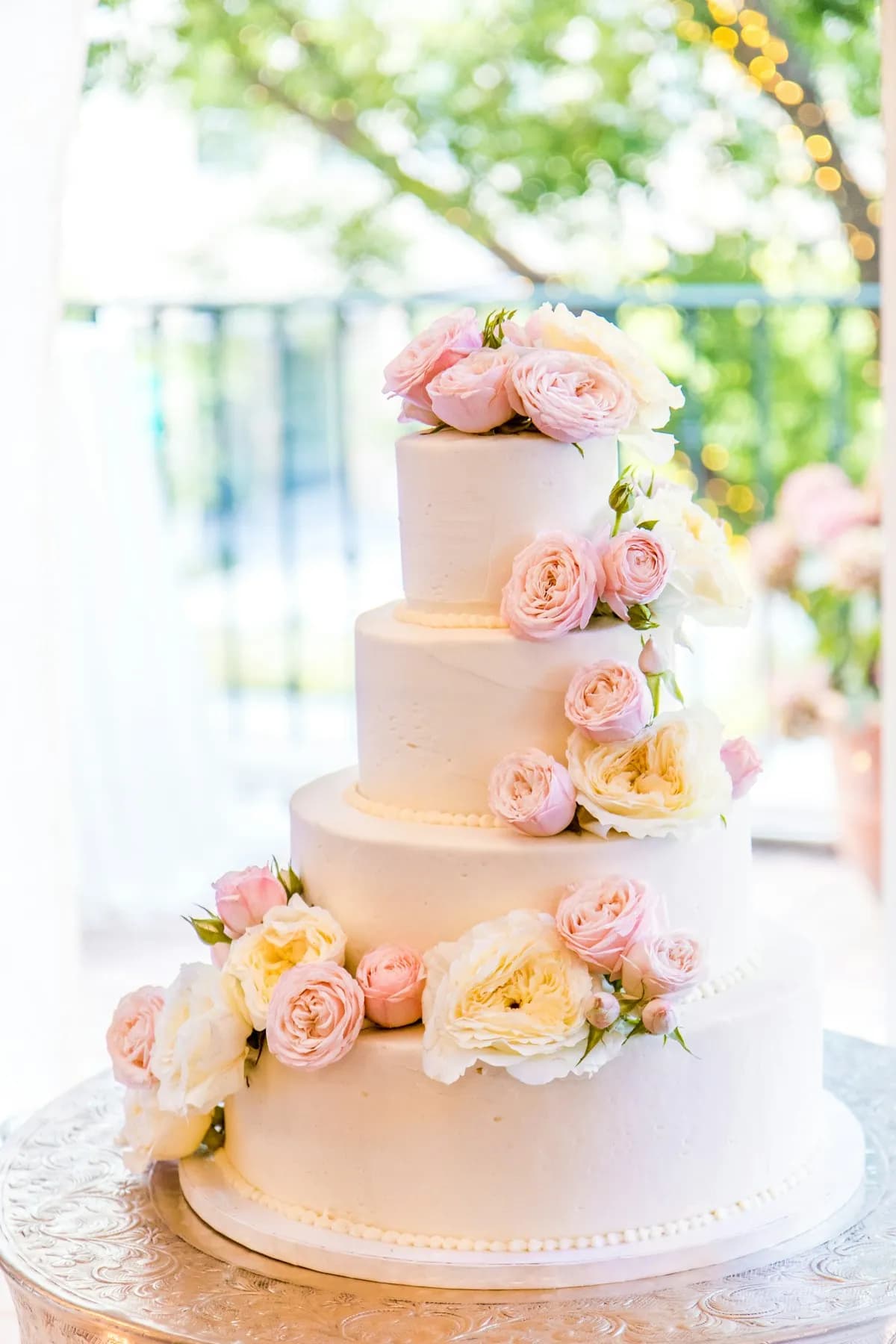
Tiered cakes aren't just for weddings — they're a smart way to serve a large group while making a visual statement. Each tier is essentially its own cake, so you simply add up the portions. Here's how the most common combinations break down.
2-Tier Cakes
| Combination | Coffee Portions | Dessert Portions |
|---|---|---|
| 14 cm + 18 cm | 12–23 | 8–15 |
| 18 cm + 22 cm | 23–35 | 15–24 |
| 18 cm + 26 cm+ | 33–40+ | 22–28+ |
3-Tier Cakes
| Combination | Coffee Portions | Dessert Portions |
|---|---|---|
| 14 cm + 18 cm + 22 cm | 27–43 | 18–28 |
| 14 cm + 18 cm + 26 cm+ | 37–48+ | 24–32+ |
| 18 cm + 22 cm + 26 cm+ | 48–60+ | 32–40+ |
4-Tier Cakes
| Combination | Coffee Portions | Dessert Portions |
|---|---|---|
| 14 cm + 18 cm + 22 cm + 26 cm+ | 52–68+ | 34–46+ |
Tiered cakes also give you the flexibility to offer different flavours on each tier — chocolate sponge with chocolate ganache on the bottom, vanilla with strawberry paste in the middle, vanilla with white chocolate ganache on top. This means you can cater to different tastes without ordering multiple separate cakes. It's also a practical way to handle dietary requirements: one tier could be gluten-free while the others are traditional.
Keep in mind that the top tier of a tiered cake is often kept as a keepsake (especially at weddings), so don't count those portions in your total if that's the plan. A 3-tier cake with a 14 cm top tier reserved means you're really working with the two lower tiers for serving.
Structurally, each tier needs at least a 5 cm difference in diameter from the one above it. Going smaller than that makes the cake look oddly proportioned and creates stability issues. Your baker will guide you on what works best visually and structurally.
Round vs Heart-Shaped: Choosing the Right Shape
At LittleCakesNL, we offer two cake shapes: round and heart-shaped. Both are beautiful choices, and each suits different occasions.
When to Choose Round
- Classic elegance: Round cakes are traditional and timeless — the default for birthdays, corporate events, and formal celebrations.
- Tiered designs: Most tiered cakes are round because the proportions look more balanced and stable.
- Decorative flexibility: Drip cakes, floral arrangements, and buttercream designs generally look best on round cakes.
- Efficient cutting: Round cakes cut into neat wedges or can be sliced in a grid pattern for larger gatherings.
- Any gathering size: From an intimate 14 cm bento cake for one to a 26 cm+ showstopper for a crowd.
When to Choose Heart-Shaped
- Romantic occasions: Valentine's Day, anniversaries, and engagement celebrations are perfect for a heart-shaped cake.
- Personal declarations: A heart cake adds a loving touch to Mother's Day, a partner's birthday, or a wedding shower.
- Statement centrepiece: The distinctive shape instantly draws the eye and makes the cake feel extra special.
One practical consideration: transport. Round cakes are slightly easier to box and carry. Heart-shaped cakes have a pointed end that needs a little extra care during transport. If you are picking up the cake yourself, just take a steady hand on the drive home.
Portion Sizes by Occasion Type
Not all cake portions are created equal. The type of event you're hosting directly affects how big each slice should be — and therefore how many portions you get from a single cake. Here's how the Dutch tradition and practical experience break it down.
Koffietafel (Coffee Table)
The classic Dutch koffietafel calls for slim, elegant slices — about 2.5 cm wide at the outer edge. These are modest portions meant to accompany coffee or tea, not replace a meal. This is the standard portion size most bakers (including us) use when quoting portion counts. An 18 cm round cake yields 8–15 of these.
Dessert Portions
When cake is the main event — served as dessert after dinner — people expect a generous slice. Think 4–5 cm wide at the outer edge, often served with cream, ice cream, or fruit. An 18 cm cake that yields 15 coffee portions will only give you about 8–10 dessert portions. Plan accordingly.
Children's Party
Here's the honest truth: at a children's party, only 60–70% of kids will actually eat their cake. Many will take a bite and run back to playing. Some will be too hyped up on other treats. Order for the number of children who will realistically eat, not the total guest count. An 18 cm cake is usually enough for 8–12 children.
Wedding
Wedding cake portioning is an art. If you have a dessert table with cupcakes and other sweets alongside the centrepiece cake, only 70–80% of guests will eat cake. Portions tend to be dessert-sized since it's an evening affair. Factor in both: fewer eaters AND larger slices. For 100 guests with a dessert table, you need cake for roughly 70–80 people in dessert portions.
Corporate Event
Professionals are polite eaters — about 80% will take a slice when offered. Coffee portions are standard for corporate settings. Keep slices neat and uniform; nobody wants to be the person wrestling with an oversized slab of cake in a meeting room.
Borrel (Dutch Drinks Reception)
At a borrel, cake competes with bitterballen, cheese, and other snacks. Serve finger portions — thin slices that people can eat in two bites while standing and holding a drink. You'll get roughly 50% more portions from a cake when you cut it this way, but fewer people will eat it since there are so many other options.
How Many People Actually Eat Cake?
This is the question that separates smart cake ordering from wasteful cake ordering. The number of guests at your event is not the number of portions you need. Every experienced baker knows this, and now you will too.
| Occasion | Realistic Eating % | Notes |
|---|---|---|
| Birthday (adults) | 85–95% | Cake is the star; most people eat a slice |
| Children's party | 60–70% | Kids grab, nibble, and run off to play |
| Wedding with dessert table | 60–75% | Many guests fill up on other desserts first |
| Wedding (cake only dessert) | 80–90% | Higher when there's no competing sweet option |
| Borrel / drinks reception | 50–70% | Cake competes with savoury snacks |
| Corporate event | 75–85% | Depends on time of day and other catering |
The Formula
Here's the simple calculation that will save you money and reduce waste:
Total guests × eating percentage = portions needed
Example: You're hosting a birthday party for 40 adults. The eating percentage is about 90%.
40 × 0.90 = 36 coffee portions needed
A 22 cm round cake (15–20 portions) would be too small. You'd be better off with a 26 cm+ cake (25+ portions) or a 2-tier combination.
Another example: A children's party with 25 kids. Eating percentage is 65%.
25 × 0.65 = ~16 portions needed
An 18 cm cake (8–15 portions) is perfect — no need for the 22 cm you might have ordered otherwise.
Want to be safe without going overboard? Add a 10% buffer to your calculated portions. So for the birthday party above: 36 + 4 = 40 portions. That's your sweet spot — enough for everyone who wants a slice, not so much that you're eating leftover cake for a week.
One important caveat: these percentages assume the cake is served at the right moment. If you bring out the cake two hours after dessert when everyone is about to leave, your eating percentage drops dramatically. Timing matters as much as sizing.
Common Mistakes When Ordering
After years of baking cakes for events across Rotterdam, Vlaardingen, and the rest of Zuid-Holland, we've seen the same ordering mistakes come up again and again. Here's how to avoid them.
1. Ordering for Guest Count, Not Eaters
This is the number one mistake. If you have 50 guests at a wedding with a dessert buffet, you don't need 50 portions of cake. You need 35–40 at most. Use the eating percentages from the previous section and save yourself money and waste. It's much better to have a slightly smaller cake that's completely enjoyed than a huge one with half of it going in the bin.
2. Forgetting the Occasion Type
A cake for a koffietafel and a cake for a dessert course are fundamentally different orders, even if the guest count is the same. Tell your baker when and how the cake will be served. "It's for 30 people" is not enough information — "It's for 30 people as a dessert after a three-course dinner" tells your baker exactly what size to recommend.
3. Not Accounting for Other Sweets
If your event has a candy bar, dessert table, or any other sweet treats, your cake consumption will drop. Every extra dessert option reduces the percentage of guests who'll eat cake. Mention everything you're serving to your baker so they can adjust the recommendation.
4. Ignoring Dietary Needs
Finding out two days before the event that three guests are gluten-free and two are vegan is a recipe for stress. Ask about dietary requirements early. It's often more practical (and cost-effective) to order a small separate cake or a batch of cupcakes for guests with specific needs rather than making the entire cake allergen-free, which can affect taste and texture.
5. Choosing the Wrong Shape
We offer round and heart-shaped cakes. Round is the versatile default for most occasions and works best for tiered designs. Heart-shaped cakes are ideal for romantic celebrations. Match the shape to your occasion.
6. Making Last-Minute Changes
Changing from an 18 cm to a 26 cm cake two days before the event isn't like changing a restaurant reservation. Your baker has already bought ingredients, planned their schedule, and possibly started prep work. We need at least one week's notice for size changes. Plan ahead, confirm your guest count early, and communicate any changes as soon as possible.
The golden rule: communicate openly with your baker. A good baker would rather spend five minutes discussing your event details than have you end up with the wrong amount of cake. We're here to help you get it right.
Frequently Asked Questions
How big should a cake be for 30 people?
What is the difference between dessert and coffee portions?
How much cake do I need for a wedding with 80 guests?
Do you offer different cake shapes?
Can I order cupcakes instead of a large cake?
How far in advance should I order a cake?
Ready to Order Your Cake?
Whether you are planning a birthday, wedding, corporate event, or any celebration, LittleCakesNL creates custom cakes that make every occasion unforgettable.
Order Your Cake